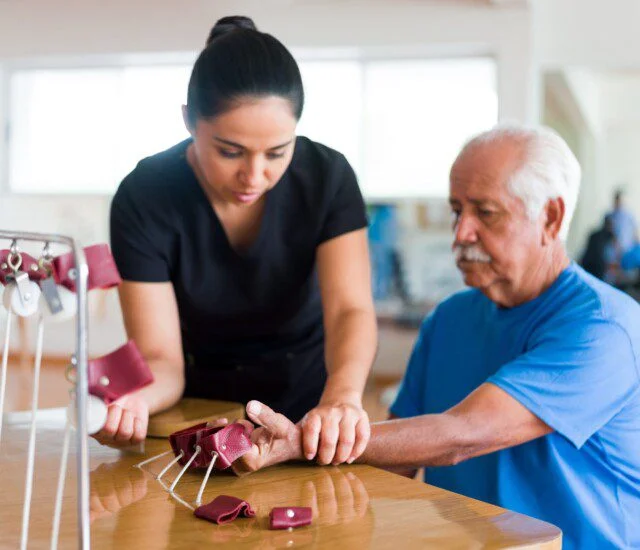
Post-Hospital Rehab for Parkinson’s: A Bridge Between Hospital and Home
After a hospital stay, many families discover that post-hospital rehab for Parkinson’s is an essential bridge between the hospital and a safe return to everyday life. Parkinson’s disease can make recovery more complex—changes in strength, balance, swallowing, and medications often mean that going straight home is not the safest option. Short-term rehab for Parkinson’s in a skilled nursing environment can help rebuild function, address new challenges, and reduce the risk of returning to the hospital too soon.
At The Waterford, a Life Care community in Juno Beach, FL, rehabilitation, skilled nursing, and home care services are available on one campus. For families seeking Parkinson’s rehabilitation after a hospital stay in the Juno Beach and Palm Beach Gardens area, this on-site support can make a significant difference in recovery and peace of mind.
Why Parkinson’s Makes Post-Hospital Recovery More Challenging
A hospital stay for someone with Parkinson’s—whether due to surgery, an infection, a fall, or another health issue—often leads to:
- Muscle weakness and reduced endurance from limited mobility in the hospital
- Changes in balance and gait, increasing fall risk after discharge
- Adjustments to Parkinson’s medications that may need fine-tuning
- New swallowing or nutrition issues, especially after serious illness
Recovering from these changes can be more complicated than simply “going home and taking it easy.” Focused rehab can help address these layered issues and create a safer path toward long-term recovery.
The Role of Skilled Nursing Rehab for Parkinson’s
In a skilled nursing rehab setting like The Waterford’s health center, a multidisciplinary team works together to support post-hospital recovery for Parkinson’s. This team typically includes:
- Nurses who monitor vital signs, symptoms, and medication responses
- Physical therapists who focus on strength, balance, and safe mobility
- Occupational therapists who help with bathing, dressing, and daily tasks
- Speech-language pathologists who address speech and swallowing issues when needed
By coordinating these services, short-term rehab for Parkinson’s can help individuals regain as much function and confidence as possible before returning home or to another level of living.
What Families Can Expect in Parkinson’s Rehab at The Waterford
During a rehabilitation stay at The Waterford’s skilled nursing center, a typical plan for someone with Parkinson’s may include:
- An initial assessment of mobility, daily living skills, swallowing, and cognitive status
- A personalized therapy schedule that balances intensity with needed rest
- Medication management to help stabilize Parkinson’s symptoms
- Education for the individual and family about fall prevention, safe transfers, and home setup
The goal is to help each person reach a level of function and safety that makes the next step—whether home, assisted living, or another setting—more successful.
Preventing Rehospitalization with Parkinson’s
One of the key aims of post-hospital rehab for Parkinson’s is to reduce the risk of returning to the hospital soon after discharge. Factors that can contribute to rehospitalization include:
- Falls and resulting injuries
- Complications from swallowing difficulties, such as aspiration pneumonia
- Medication mismanagement or side effects
- Infections or other medical issues that go unnoticed
In a skilled nursing rehab environment, nurses and therapists can watch for early signs of these issues and coordinate quickly with physicians to address them, helping to prevent avoidable setbacks.
Planning the Transition from Hospital to Rehab
Families can advocate for a smoother transition by:
- Talking with the hospital discharge planner about Parkinson’s-specific rehab needs
- Asking whether short-term rehab at a skilled nursing community like The Waterford is appropriate
- Sharing information about the person’s usual level of function before the hospital stay
- Clarifying goals for rehab, such as walking safely, climbing a few stairs, or managing self-care tasks more independently
Having a clear plan helps align expectations for both the rehab stay and what comes next.
When Families in Juno Beach Might Consider The Waterford
Families in Juno Beach and surrounding communities may want to consider The Waterford’s rehabilitation and skilled nursing services when:
- A loved one with Parkinson’s is being discharged from the hospital and does not feel steady enough to go directly home
- Home has multiple fall risks (stairs, narrow hallways, limited support) that would be hard to manage during early recovery
- Care needs after hospitalization would be too physically demanding for family members alone
Using short-term rehab as a bridge can help restore function more safely and provide a clearer picture of the level of support needed longer term.
Talking with The Waterford About Parkinson’s Rehabilitation
If your family is facing decisions about post-hospital rehab for Parkinson’s, the team at The Waterford can explain how their skilled nursing and rehabilitation services work, what a typical stay involves, and how they coordinate with hospitals and physicians. They can also help you understand how recovery in a structured setting may differ from going straight home.
Important Note About Medical Advice
This article is intended for educational purposes only and is not a substitute for professional medical advice, diagnosis, or treatment. Always consult a physician, neurologist, or other qualified health provider with questions about hospitalization, rehabilitation, or changes in Parkinson’s symptoms.